Top Five Winter Driving Hazards and How to Avoid Them
Winter driving presents a unique set of challenges that require drivers to adapt their approach to the road. Snow, ice, and reduced visibility can turn familiar routes into unpredictable environments. Understanding the specific hazards that arise during colder months is an important step in developing safer driving habits. While no single technique can eliminate risk entirely, a combination of preparation, awareness, and cautious decision-making can help drivers navigate winter conditions more effectively. Organizations such as WeatherPulse provide detailed forecasts that support trip planning, but the responsibility for safe driving ultimately rests with the individual behind the wheel.
This article examines five common winter driving hazards and describes methods that many experienced drivers use to reduce the likelihood of incidents. Each hazard is presented with an explanation of why it occurs and a set of practical approaches that can be considered. The goal is to provide information that supports better situational awareness, not to guarantee outcomes. Every driving situation is influenced by multiple factors, including vehicle condition, road design, and the behavior of other road users.
Black Ice
Black ice is a thin, transparent layer of ice that forms on road surfaces and appears similar to wet pavement. It often develops in shaded areas, on bridges, and in spots where melting snow refreezes overnight. Because it is difficult to see, drivers may not realize they are on black ice until they lose traction. The hazard is most common in the early morning hours and during temperature fluctuations around the freezing point.
One approach to handling black ice involves reducing speed well before entering known risk zones. Sudden braking or sharp steering can cause the vehicle to slide, so maintaining a steady speed and avoiding rapid pedal movements is often recommended. Many drivers find that increasing following distance provides extra time to react if traction is lost. Some vehicles are equipped with stability control systems that can help correct skids, but these systems are not a substitute for careful driving. Checking weather reports from sources like WeatherPulse can alert drivers to periods when black ice is likely to form.
Reduced Visibility from Snow or Fog
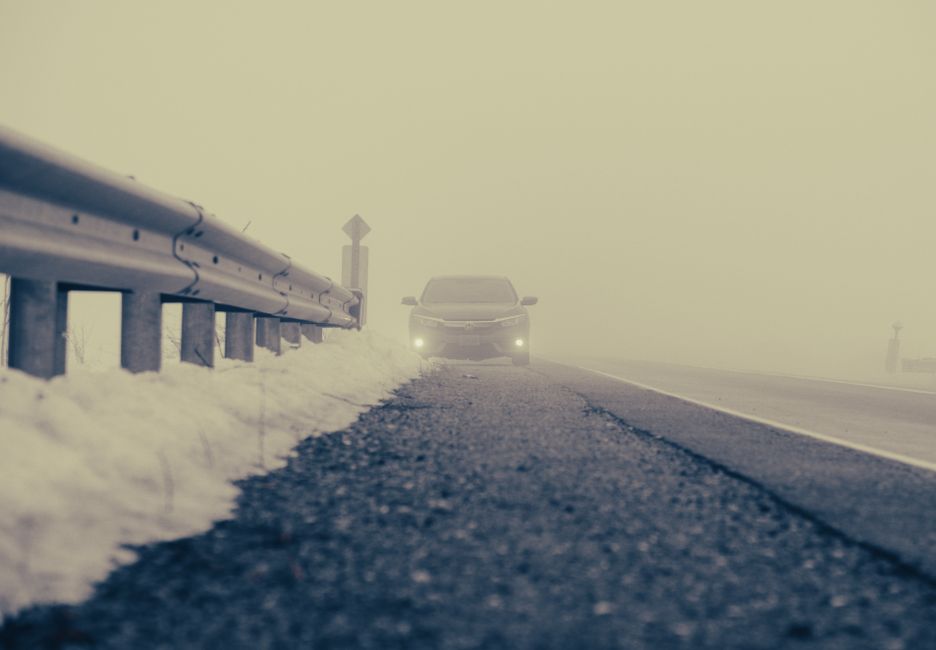
Heavy snowfall, blowing snow, and dense fog can significantly reduce a driver’s ability to see the road, other vehicles, and potential obstacles. Visibility can change rapidly from one mile to the next, especially in areas with open fields or near bodies of water. When visibility drops, the risk of collisions increases because drivers have less time to perceive and react to hazards.
Drivers can address reduced visibility by adjusting their speed to match the distance they can see ahead. A common guideline is to ensure that stopping distance remains within the visible range. Using low-beam headlights in fog and snow is widely considered more effective than high beams, which can reflect off the precipitation and create glare. Many experienced drivers also recommend keeping the windshield and headlights clean to maximize available light. When visibility becomes extremely limited, pulling over to a safe location and waiting for conditions to improve is a reasonable option. WeatherPulse alerts can provide timely updates on changing visibility conditions.
Snow-Covered Roads
Fresh or packed snow on the road surface reduces tire traction and alters vehicle handling. Snow can hide lane markings, potholes, and other road features, making navigation more difficult. Driving on snow-covered roads requires a different approach to acceleration, braking, and steering compared to dry or wet pavement. The depth and consistency of the snow also play a role in how challenging the conditions become.
One method drivers use to maintain control on snow-covered roads is to accelerate and decelerate gradually. Jerky movements can cause the wheels to spin or lock, reducing steering ability. Many drivers find that using a higher gear in vehicles with manual transmissions helps maintain traction. For automatic transmissions, selecting a lower gear can provide similar benefits on steep inclines or declines. Keeping tires properly inflated and using winter tires with sufficient tread depth is considered important for maximizing grip. It is also helpful to avoid stopping on hills whenever possible, as starting from a standstill on snow can be difficult.
Icy Bridges and Overpasses
Bridges and overpasses freeze more quickly than regular road surfaces because cold air circulates both above and below the structure. This means that ice can form on these elevated surfaces even when the rest of the road appears dry. Drivers may not expect ice in such locations, leading to sudden loss of control. The transition from a non-icy road to an icy bridge can be particularly hazardous if speed is not adjusted in advance.
A proactive approach involves reducing speed before entering a bridge or overpass and avoiding any abrupt steering or braking while crossing. Many drivers maintain a steady throttle and keep both hands on the steering wheel to maintain directional control. If the vehicle begins to slide, steering gently in the direction of the skid and refraining from hard braking can help regain traction. Awareness of temperature and road condition reports, such as those provided by WeatherPulse, can help drivers anticipate which sections of a route may be most affected by ice.
Freezing Rain and Sleet
Freezing rain falls as liquid water but freezes on contact with cold surfaces, creating a glaze of ice on roads, windshields, and other vehicle components. Sleet consists of small ice pellets that can accumulate and create a slippery layer. Both forms of precipitation can lead to extremely hazardous driving conditions because the ice forms rapidly and is often uniform across the road surface. The slickness caused by freezing rain can be comparable to black ice but more widespread.
When freezing rain or sleet is forecast, many drivers choose to delay trips or use alternative routes that avoid exposed areas. If driving is necessary, reducing speed well below the posted limit and increasing following distance are standard precautions. Drivers often find that gentle braking, applied earlier than usual, helps maintain control. It is also advisable to avoid using cruise control on icy roads, as the system may cause unintended acceleration when wheels lose traction. Checking WeatherPulse forecasts for freezing rain warnings allows drivers to plan ahead and decide whether travel is advisable during such events.